

Event
ChariTea and Refuge Worldwide team-up with Groove For Good
Ron Trent, CARISTA, Sofia Kourtesis to join open-air fundraising party in Berlin.
Loading
"Expect to be challenged, but unpretentiously."
By Staff
Celebrating "radical live music", the fourth edition of Gaswerk Music Days takes place across two weekends (24 July - 2 August) at Gaswerksiedlung.
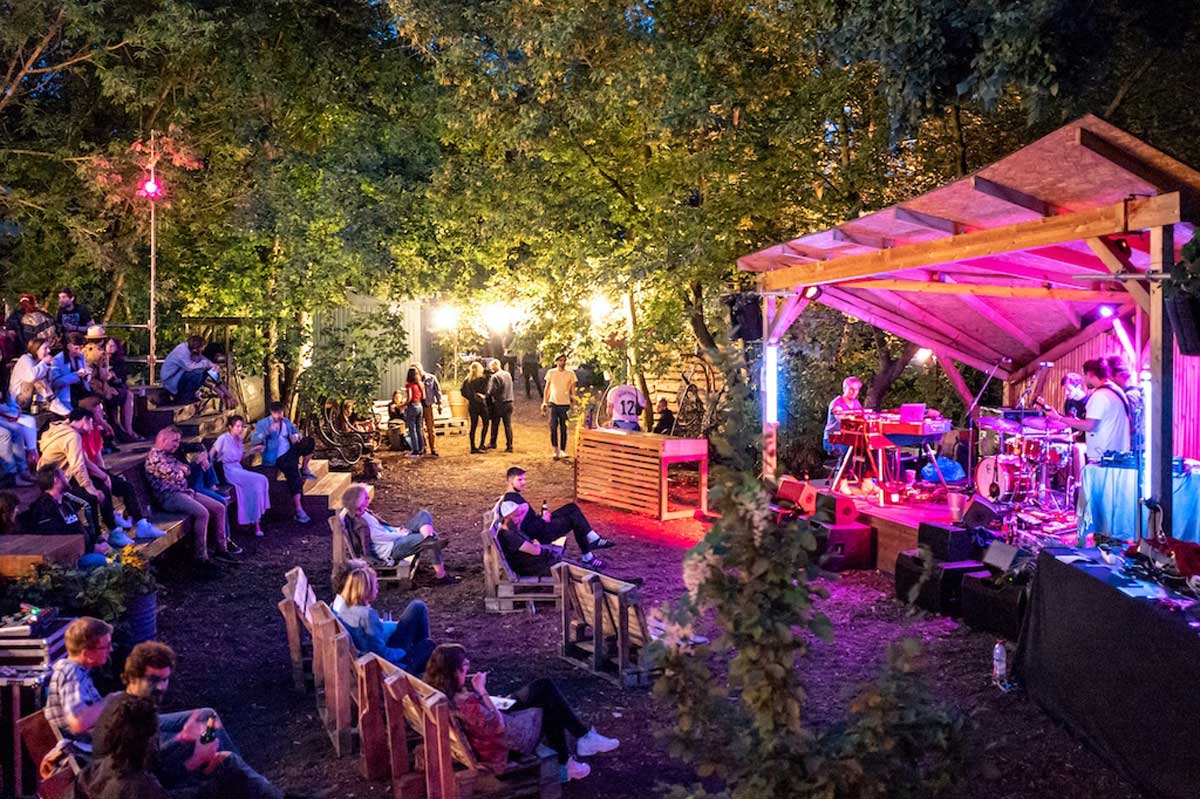
The East Berlin space is home to open-air location gART.n, the concert venue BLOCK1 and multiple creative studios, which all make a year-long contribution to the musical ecosystem surrounding Gaswerk Music Days via a thriving artistic community and various residency programs.
This year's festival involves a typically global and sonically avant-garde program, with highlights including Catu Diosis, MC Yallah & Scotch Rolex, Burnt Friedman & João Pais Filipe, Holy Tongue and Azu Tiwaline. Alongside their ongoing radio residency at Refuge Worldwide, Andreas and Letizia from the curatorial team explained some more about the vision behind the project - and obstacles in front of it. Read more via the Q&A below and check the Gaswerk Music Days site for tickets.
How would you describe the experience people can expect to have at Gaswerk Music Days? Expect a very mixed crowd: musicians, producers, curators, passionate listeners, dancers, neighbours, and curious people who simply love discovering new music. Gaswerk Music Days has always been a place where different scenes naturally meet around a shared passion for listening.
This year the festival unfolds in six chapters, each exploring a different musical direction and way of experiencing live music. Some days are driven by African sounds, Singeli, percussion, bass music and powerful MCs - full of movement, sweat and collective energy. Others invite a slower, more attentive listening through ambient music, delicate acoustic moments, experimental electronics, modular synthesis and free improvisation. There are deep dub frequencies, unexpected collaborations, plenty of surprises... and, on the last day, a very special secret guest who promises quite a few laughs. We are interested in making adventurous music accessible, without ever compromising its depth. So expect to be challenged, but unpretentiously.
How has the festival's mission evolved since the first edition? The first edition was Gaswerk Art Days and was based on a fundamentally different concept. Starting with the second edition, under the guiding theme Radical Live Music, the focus shifted toward exceptional music for curious, adventurous listeners.
Since then, we've aimed to become increasingly nerdy and specific, presenting a broad spectrum of outstanding music while celebrating its more unconventional corners. Surprises, improvisation, and new collaborations have become ever more central to the festival. With each edition, we make more room for the unexpected.
What was your concept for the music curation this year? Are there differences to previous years?
The first edition was more multidisciplinary, bringing together music, dance and visual arts. Over time, however, we went on to fully embrace our music soul. During the first two editions, the festival unfolded across three stages with several performances happening simultaneously. Since last year, we have simplified the format to a single shared program each day. We listen together, we dance together, we experience the festival as one body.
While our natural instinct was to mix very different genres and artistic languages in each day’s lineups, we found that it is more rewarding to think of the whole festival as the journey itself. So each day now has its own musical identity, atmosphere and mode of listening, while across the six days audiences can travel through radically different worlds. The festival as a whole remains wonderfully eclectic - but each chapter has the time and space to fully unfold.
The titles of the dates tell us a lot about what’s happening - MODULA explores synthesis and modular performance; MOTHER DRUM focuses on rhythm and collective energy; ROOTSONIC traces connections between tradition and reinvention; and so on.
With such a global program, do you have problems with visas for Germany? Yes and no. Visa procedures are sometimes straightforward and sometimes quite demanding. For the past three years, we have been developing ongoing artistic exchanges between Berlin and several African scenes, particularly through our bridge with Nyege Nyege and artists from Uganda and beyond. These long-term relationships have helped us establish constructive dialogue with embassies, cultural institutions, and partners in different countries.
We are especially grateful for the support and advice we have received from institutions such as the Goethe Institut, whose work genuinely helps make international artistic exchange possible.
At the same time, we believe that cultural mobility should be easier. Artists, ideas, and collaborations do not stop at national borders, and international exchange benefits everyone involved. Festivals, residencies, and cultural organisations play an important role in creating these connections, and we hope to see frameworks that increasingly recognise and support that reality.
It’s a blessing to have residency programs in the same space as the festival all year round. How do you integrate that aspect into your festival?
The residency program is very meaningful to the festival program. We don't see it as an "add-on", but as an essential part of the artistic process. Artists spend time together before the festival, sharing studios, experimenting, recording, rehearsing and, perhaps most importantly, getting to know one another. Many of the collaborations presented on stage simply wouldn't exist without this period of living and working together.
At the same time, the residencies are part of a much broader creative ecology. Throughout the year, Gaswerksiedlung hosts dozens of artists developing their own projects, many of whom present early versions of their work during our Gaswerk Music Concerts series in spring and autumn. Some ideas continue growing for months before finding their place at the festival. Projects like Crazy Mega Jam or MODULA are good examples of formats that emerged organically from the community and gradually became part of the festival's identity.
We like to think of the festival as a place where all these different creative trajectories briefly meet: long-term artistic relationships, residency collaborations, spontaneous encounters, and projects that have quietly matured inside the studios. That continuity gives the festival a very unique atmosphere.
Can you talk about some of the main challenges facing a festival in Berlin these days? One challenge is attention itself. We live in a city overflowing with cultural offers, and artists and audiences alike are increasingly exposed to acceleration and fragmentation. Creating situations where people are willing to slow down, listen deeply and commit time to a shared artistic experience has become both more difficult and more necessary.
At the same time, Berlin is changing. Independent cultural initiatives are facing growing economic pressure, while the political and financial value attributed to culture often seems to be diminishing. People simply have less disposable income to spend on concerts and festivals, and this inevitably affects the entire ecosystem.
Digital platforms have made music more accessible than ever, but they have also changed our relationship with live experiences. Especially for younger generations, discovering music increasingly happens through screens rather than through shared physical spaces. Festivals therefore have to think not only about programming, but also about sustaining communities, creating meaningful encounters, and reminding ourselves why gathering around live music still matters.
Can you describe a couple of particularly special moments or memories from the previous years?
There have been so many special moments over the years. What stays with us most are often the moments where music, place, and community suddenly become inseparable.
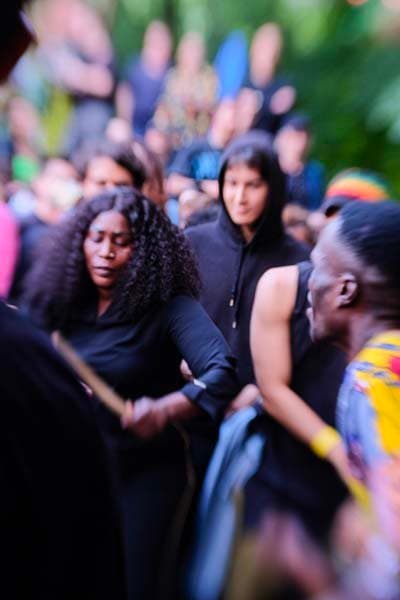
Last year, one of those moments happened during the performance of Mark Ernestus’ Ndagga Rhythm Force. The energy was extraordinary: all seemed to merge into a single moving body - a deep collective musical entrancement.
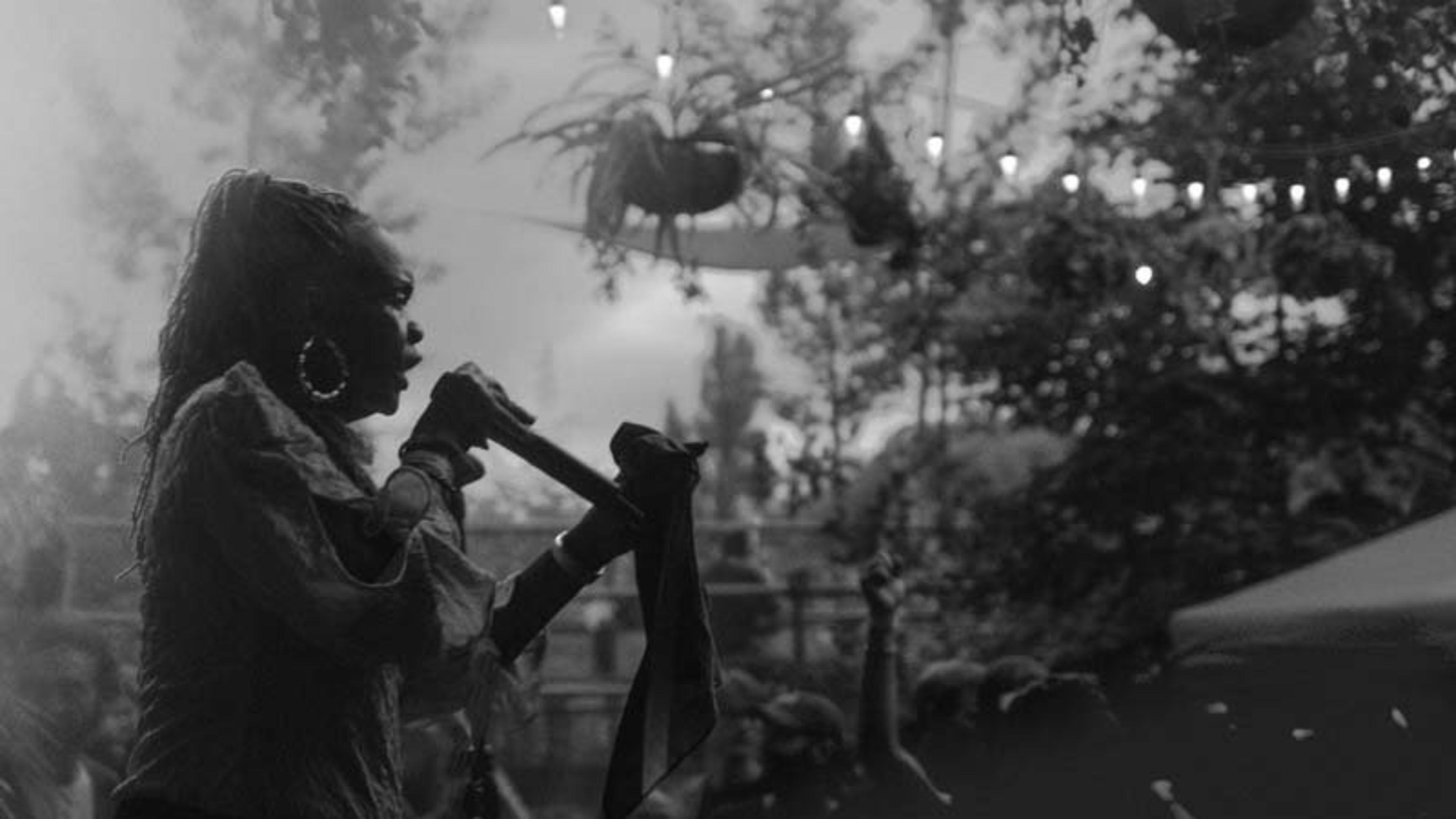
Another unforgettable memory comes from the performance of Arsenal Mikebe and HHY & The Kampala Unit. The weather was far from ideal, but nobody seemed to care. The rain became part of the experience, and the percussive, high-energy performances generated a sense of joy, resilience, and collective presence that nailed the spirit of the festival.
We also remember with great affection the intimate late-night listening concerts that took place during the first two editions of the festival, in the private gardens of the Gaswerksiedlung - a very different kind of intensity. Listening together in near silence to Derek Gripper's solo guitar, or ending the night with the delicate piano performance of Sasha Hladyi... These suspended moments of acoustic awe were quiet, fragile, and deeply moving, and they remain among our most treasured memories.
Looking back, what connects all these experiences is not a particular genre or artistic approach, but the feeling of collective presence that can emerge when people gather around music with genuine attention and openness.
If you could book any artist, past or present, for Gaswerk Music Days, who would it be and why? Andreas: If I could book any artists, past or present, for Gaswerk Music Days, I would choose Miles Davis and Jimi Hendrix. To me, they are two of the most innovative musicians of all time.
Both embodied the spirit of improvisation and created a sound that was entirely their own. What makes them so extraordinary is their uniqueness - they never followed trends but instead shaped their own musical language. They made the music they felt they had to make, constantly pushing boundaries and evolving their artistic vision. In doing so, they not only defined their own legacy but also inspired entirely new musical movements.
This kind of artistic courage - the determination to stand by your own vision, your own sound, and your own artistic identity - is a core value of Gaswerk Music Days. We celebrate artists who dare to explore new paths, challenge conventions, and create something truly original.
Letizia: Impossible for me to choose just one name - it wouldn't really represent what we love and try to cultivate at Gaswerk. I'd rather imagine Gaswerk a place somewhere between Japanese master Susumu Yokota's visionary, organic electronics, Canadian band Godspeed You! Black Emperor's cinematic, cathartic tension between light and darkness, and Ethiopian pianist Emahoy Tsege Mariam Gebru's delicate, spiritual freedom.
Ron Trent, CARISTA, Sofia Kourtesis to join open-air fundraising party in Berlin.
Introducing our new run crew.

Apply for the workshop now!