The Breakfast Show | Sarj
- Talk Show
- Post Punk
- Experimental
Loading
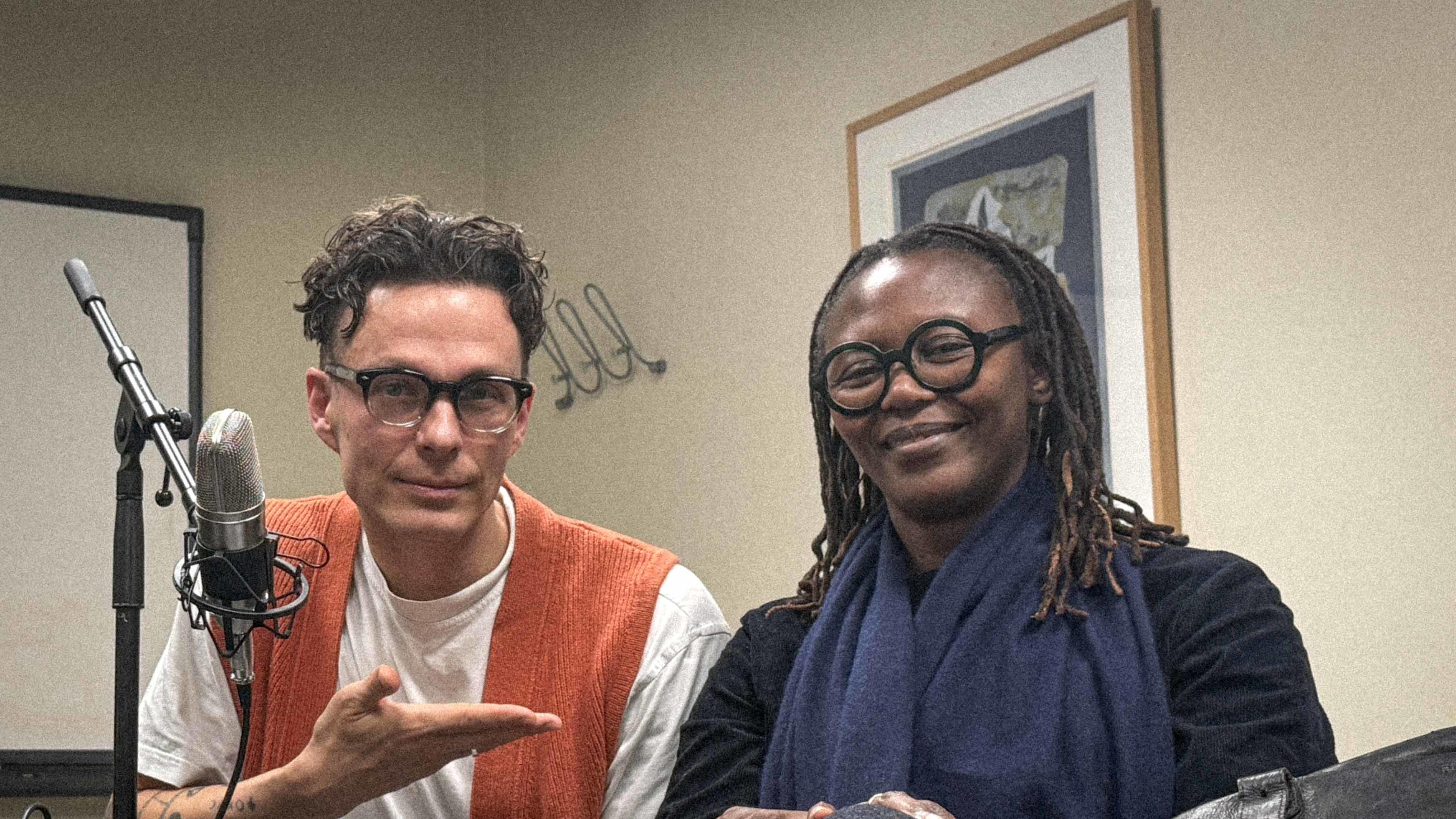
With ILYICH and Anawana Haloba
Listening Hymns is a performative spoken word archive, tracing ways of listening through the words of artists, musicians, poets, writers, educators, activists, and many others.
In this episode, artist and educator Anawana Haloba joins me for a conversation and shared music selection, recorded at the Oslo National Academy of the Arts. The encounter follows her opening speech at the academy, in which she began with listening as a point of departure for learning.
For Anawana, listening is not devoid of sight and begins with recognition: seeing and acknowledging the person in front of you sets the conditions for listening and conversation. The conversation flows through songs and anecdotes, touching on how recognition can reach beyond appearances and the racial categories through which history has taught people to perceive one another.
Recalling the trade union meetings held in her childhood home, Anawana returns to the organising, grievances and everyday exchanges she overheard behind the family sofa. These experiences found their way into her first poems and continue to inform her work, in which tempo, duration and interruption serve as a means of paying attention and reaching the body without relying on spectacle.
Anawana Haloba is an artist and educator from Zambia, working between Oslo and Livingstone. She brings oral traditions, poetry and sound into installation, video and performance. Her practice investigates how colonial and political histories shape the present, with experimental operas that carry histories of struggle, mourning and celebration through the voice. She co-founded the Livingstone Office for Contemporary Arts (LoCA), a library, research centre and experimental platform for collective exchange. Her work has been presented at the Venice, São Paulo and Sharjah biennials, among many others.
Throughout the episode, we follow listening as a practice learned through living with others, asking how recognising one another opens possibilities for sharing knowledge, building community and growing in solidarity.