
Event
ChariTea and Refuge Worldwide team-up with Groove For Good
Ron Trent, CARISTA, Sofia Kourtesis to join open-air fundraising party in Berlin.
Loading
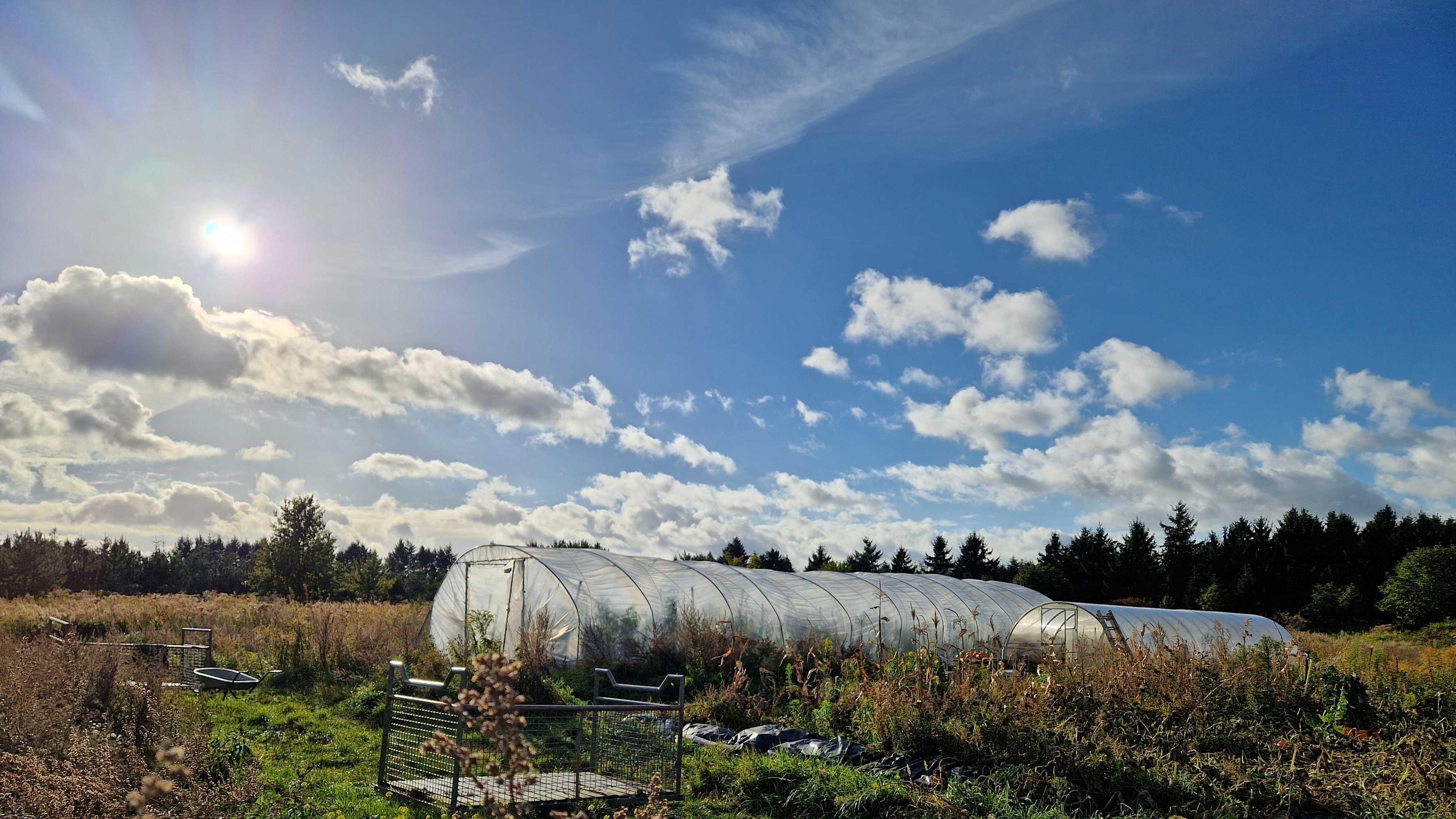
"Taking back the countryside from the AfD one crop at a time."
By Staff
Running since 2022 from a one hectare site in rural Brandenburg, Aloti Farm has the mission to make tasty, organic veggies and herbs available at affordable prices, whilst centering BIPoC, queer, migrant and disabled folks in its farming practice and political work.
Their veggie boxes come in different tiered packages, delivered to pick-up sites in Berlin Moabit and Neukölln. Suppporting Aloti means supporting a Black femme-run local project, as well as divesting a portion of your income from exploitative, large-scale farming operations which care little for the sustainable agriculture practices that Aloti prides itself on.
The team recently launched a crowdfunder due to lost crops during an exceptionally cold winter - alongside other issues typically faced by small, community focused businesses in the current economic climate. In the Q&A below, Sika from the Aloti team explains more about the farm and what you can do to support.
Can you please introduce yourself and the Aloti Farm project? Aloti Farm is an organic permaculture farm run by a tiny Black FLINTA centered team near Berlin and nurtured by an ever growing community of generous helpers. We grow vegetables and herbs on 1 hectare of land and make them accessible thanks to a solidarity-based price scale. The farm is open to all who share our values and we center BIPoC, queer, migrant and disabled folks in our farming practice and political work. The team is composed of:
Nicole, an ewe and tatar wannabee farmer and founder of Aloti Farm. She chose to nurture soil and tend to life as a way to resist the necropolitics that rob us of peace and of a healthy earth.
Alkmini, an art teacher, a community gardener, a seed librarian and beekeeper. They continue to work as a workshop facilitator and support different communities in their locality.
Lilya, Nicole’s mom. She is retired and lives in Togo, but spends about three months a year in Berlin to volunteer at the farm, support the local sustainability efforts, and bake yummy pies for our community help days.
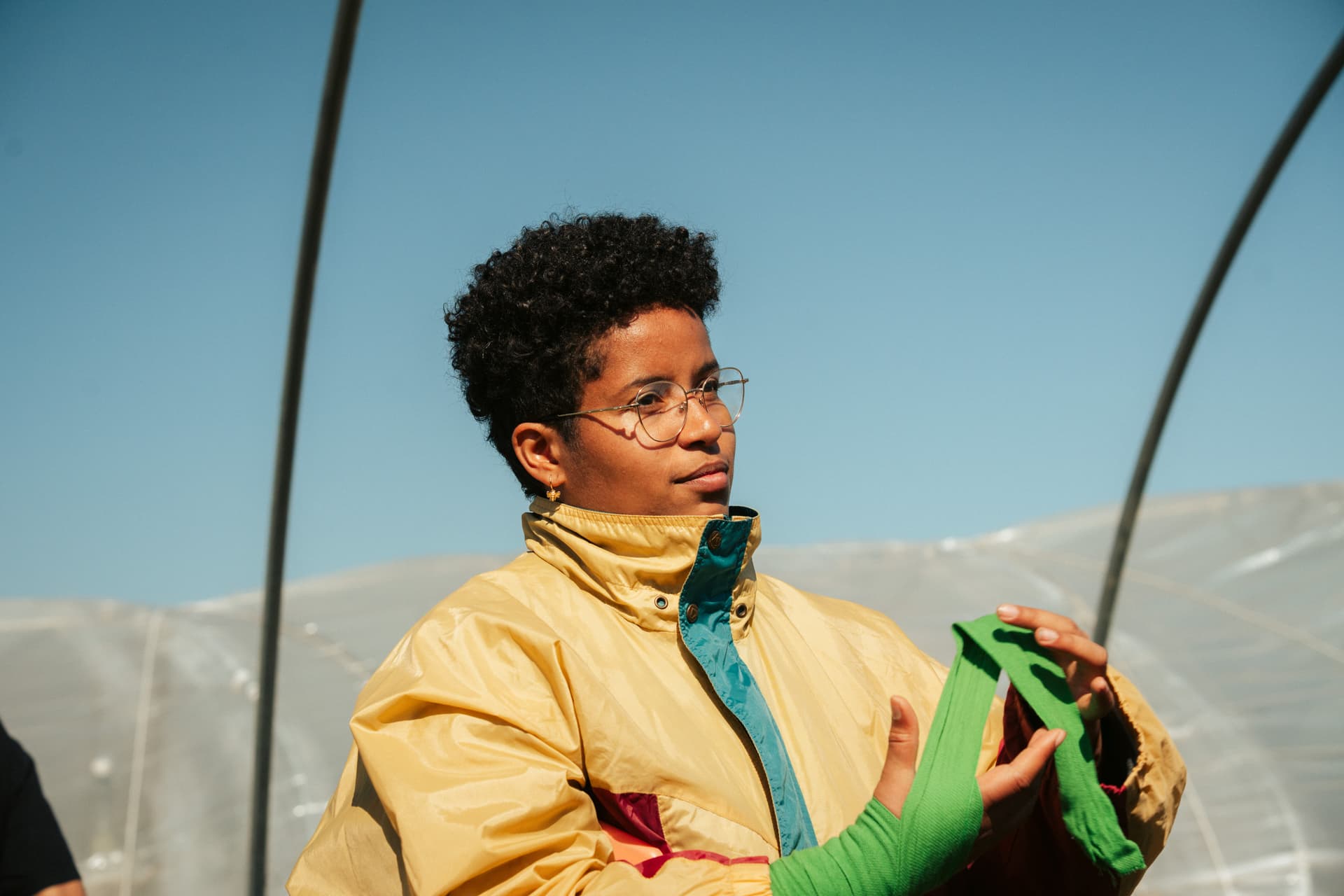
Myself, Sika, a community organiser, an enthusiastic veggies caregiver and an experimental cook. From permaculture to food-saving, I am committed to change our relationship to food.
How has it been integrating into the local area in Brandenburg?
Well it is still an ongoing process. It's a challenge to create a "non conventional" farm in Brandenburg where being black, queer, migrant, disabled doesn't rhyme with being a farmer or even with belonging in Brandenburg. Yet we also receive support locally, we understand ourselves very well with our neighbours and slowly connect with more and more leftist, antifacist collectives and projects locally. We aim at being more present within the area, participating in local fairs and collaborating more within Brandenburg.
Can you recommend at least one other farming initiatives one should discover in Brandenburg? One of our current favourite farming project in Brandenburg is Nettles and Poppies. It is a herb farm, a queer feminist space and a refuge for birds, insects and people. They offer workshops, a space for rest and learning and just like us they try to take back the countryside from the AfD one crop at a time. You can also visit the "Solidarische Landwirtschaft Lawine Neuendorf i. S" a beautiful solawi with delicious veggies and cute goats; or one of our neighbours, the Mizelium project, a space commited to topics of connection, critical whiteness, anticolonial practices and many other topics. But don't forget that Brandenburg is a large area and there are many projects we don't know about. So be curious and let's give strengh to as many alternative/leftist/BIPOC focused projects as possible. What do you currently have growing on the farm?
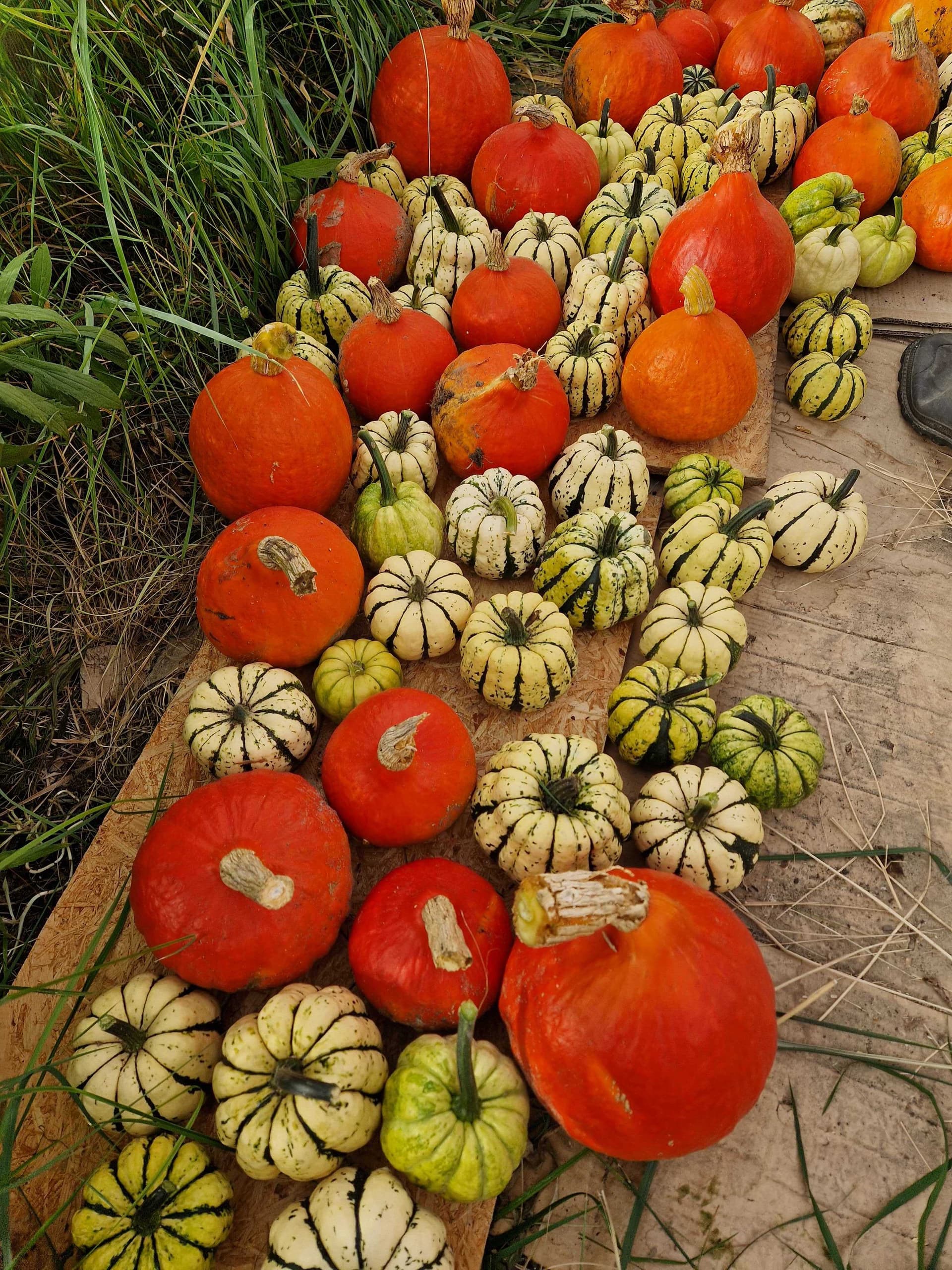
After a late start of the season we have many veggies that are starting to sprout and grow. From spinach, salads and cabbages to tomatoes, corn, and zuchini, we have many different type of veggies that are quite common in the west European diet. One vegetable that is new to our catalogue this year is okra. We are trying to grow some in the greenhouse and are hopeful to have some Brandenburg-grown okras in some months! We are also slowly expanding our cultures to fruits and berries but for now it is the very beginning so we have to wait until end of summer to fall to see if our young trees and bushes are ready to produce some fruits.
What are some of the most beautiful memories and moments from the journey so far?
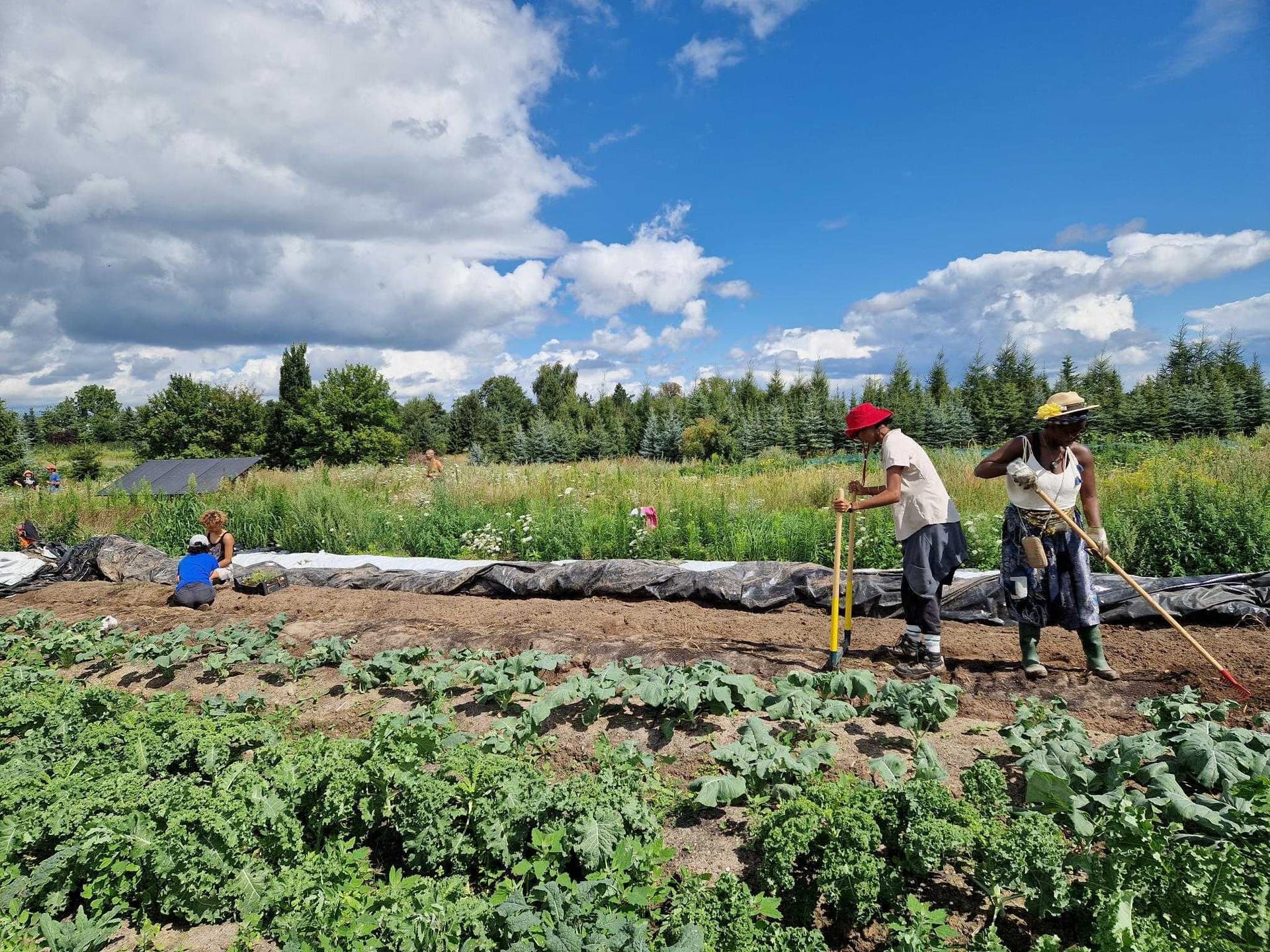
Many of the most beautiful memories we have at the farm are memories of community: volunteers showing up to help out, incredible amount of love and support given to us by so many people. The retreats we organise each year are one of those moments. We invite people to join us for a weekend of connection, rest and farming. During those weekends we get to share our farm with many people, we get so much love, cook meals together with the fresh veggies and meet amazing people around a bonfire. But I can't talk about Aloti without talking about the helpout days we host where volunteers come to help and we get to share delicious meals on the farm. Aloti has come this far thanks to all the great people (and talented cooks) who came on their free time to work hard with us, building greenhouses, weeding, planting, watering...
Can you please explain the factors which have led to this fundraiser being necessary?
Aloti, like many other small scale farmers around Berlin has faced a complicated season start this year. As you might have noticed, this winter and spring have been particularly unusual. It was especially cold and dry and we lost a lot of crops due to the climate. Since our project is very young and built on limited resources, we do not have enough greenhouses to simply grow crops in when it's too cold, which makes us particularly vulnerable to changes in weather. Because of this (and because we don't have a cold storage space for root vegetables, which could have buffered this year's losses a bit) we had to start veggie box deliveries two months later than expected. Add to that a few weeks in which core team members were out of action due to illness and injuries, visa issues, and a lot of last-minute cancellations of subscriptions, and you can imagine how quickly time and money resources end up stretched very thin. Finally, one of our main focus is to provide accessible healthy food to every budget and life situation. To achieve this goal we offer a sliding price system based on solidarity. While we want to continue with this model, we also need to reassess our financial structure to be more sustainable.
How else can people help, other than donating?
Help can come in many forms for a farm!
First, sharing the word about our fundraising is of great help. Tell everyone around you: friends, neighbours and family. Not everyone can donate but everyone can spread the word.
Then we are still looking for people/households to join our Harvest-share and subscribe to the weekly veggies-boxes. On top of receiving fresh, locally grown organic vegetables, you get to support a safer space for marginalized people.
Finally, there are never too many hands during our help-out days. People can join us to discover the farm and help out with some farm-work ( planting, weeding, building etc.). It is a very friendly atmosphere and one can make a day trip with friends out of it or a very unique date.
Donate to Aloti Farm's fundraiser here.
Photography includes shots by Evelyn Batchonkova
Ron Trent, CARISTA, Sofia Kourtesis to join open-air fundraising party in Berlin.

Introducing our new run crew.

Apply for the workshop now!