Event
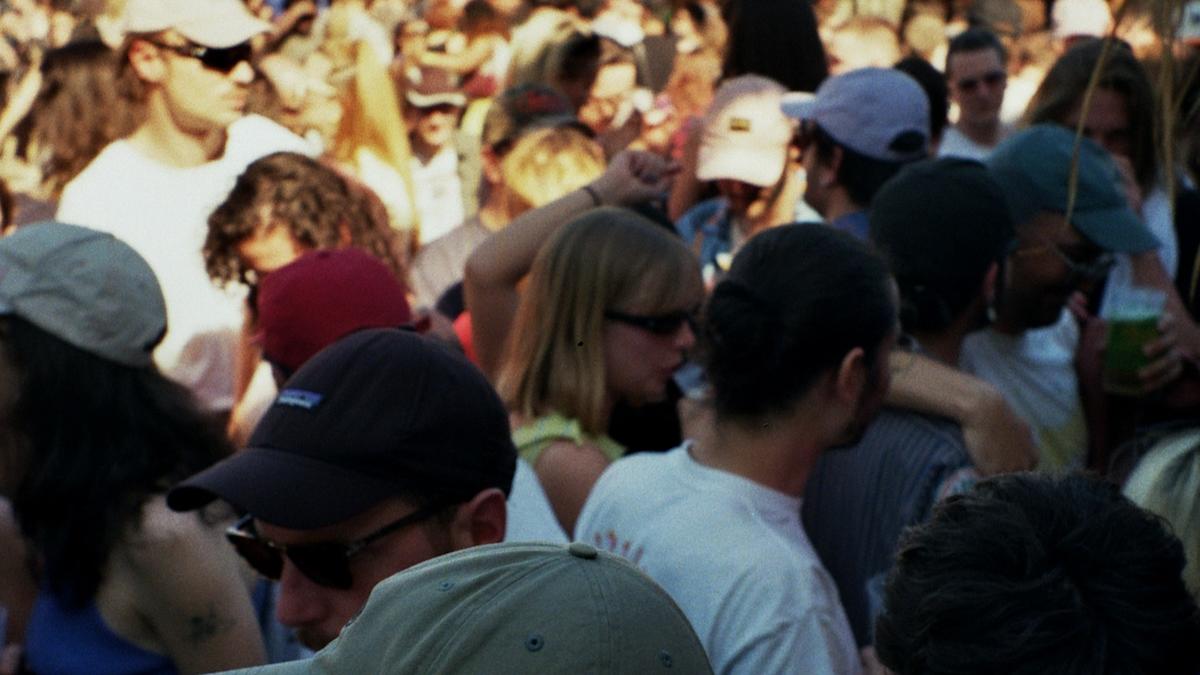
ChariTea and Refuge Worldwide team-up with Groove For Good
Ron Trent, CARISTA, Sofia Kourtesis to join open-air fundraising party in Berlin.
Loading

An Interview with Amirali Ghasemi.
By Noushin Afzali

For more than two decades, Amirali Ghasemi has worked at the intersection of artistic practice, curatorial experimentation, and community-building. Emerging from Tehran’s late-1990s cultural landscape, Ghasemi founded Parkingallery in his parents’ garage in 1998—an initiative that later expanded into an online platform and became one of the early examples of an artist-run space in Iran. Since then, his work has continuously explored how artists can create independent infrastructures when institutional support is limited.
Across projects such as New Media Society, Limited Access Festival, Parking Video Library, and more recent initiatives in Berlin, Ghasemi has focused on building flexible platforms for collaboration, research, and the circulation of moving-image practices. His work often reflects on questions of visibility, censorship, archives, and the politics of representation, particularly in relation to Iranian contemporary art and its global reception.
In this conversation, Ghasemi reflects on the origins of his early initiatives, the experience of navigating visibility and protection in projects like Tehran Remixed, and the collaborative philosophy behind his long-running artist-led structures. The interview also discusses recent curatorial projects, including Underwater Eruptions in Berlin, and the challenges of sustaining community and cultural dialogue within the Iranian diaspora today.
You started Parkingallery in your parents' garage in 1998, long before "artist-run space" was a common term. What drove you to create that physical and digital platform for artists in Tehran?
When I entered university, I quickly realized something was missing. The program had many students but very limited infrastructure, tools, or working space. Once classes ended, we had to leave the building immediately, with no campus environment where students could continue working.
Because of this, I decided to create something myself. My family had an unused parking space, and at eighteen I organized my first exhibition there in 1998. I cleaned the space, made posters, and improvised lighting with simple string lights. The exhibition included a few paintings and an installation.
Soon I realized many other students had the same need. The garage gradually became a place where we could meet after classes, work on projects, watch films, and occasionally experiment with performances or installations. What began as a simple initiative slowly evolved into an informal artist-run space that continued until 2014.
Around the same time, I became interested in design. With a friend who could code, I launched Parkingallery.com in 2002 as a virtual gallery. At a time when the local art scene offered few opportunities for emerging artists, the website allowed us to create our own platform.
Because the site was in English, it quickly reached an international audience. Researchers, curators, and artists from abroad began contacting us, creating unexpected connections. This happened during the reformist period of Mohammad Khatami, when cultural exchange felt more possible. The physical and digital spaces complemented each other: one offered a local meeting point, while the other allowed us to communicate beyond our immediate context.

(Above) Parkingallery - during the exhibition on Photopaper without name and Control Tower Workshop 2012
Your Tehran Remixed series involved masking faces—an act of "pre-emptive censorship." How did navigating visibility and concealment as an artist later shape the way you built structures for collaboration as a curator?
The project began when I wanted to photograph my surroundings—people I encountered and scenes from everyday life. At the time the internet was rapidly expanding among Iranians, and I became concerned about what might happen once these images circulated online. I felt responsible for protecting the identities of the people appearing in the photographs, including those captured unintentionally.
To address this, I digitally manipulated the images in Photoshop by adding white layers that partially obscured faces or details. It was a simple intervention, but it allowed me to share the images while protecting those represented. I first presented the work in a photography café where some of the photos had originally been taken.
The reactions were very mixed, which encouraged me to push the idea further. I began photographing more hidden layers of social life—car rides, private gatherings, and parties.
Eventually the project developed into Tehran Remix, which imagined a more interactive format where viewers could click through scenes and uncover different layers. Although that version was never fully realized, the idea influenced the way I thought about access and visibility.
The photographs later gained international attention and were widely exhibited. Looking back, the project was about negotiating the tension between showing and protecting. That question later influenced my curatorial work: working patiently without seeking immediate visibility, and focusing instead on trust, responsibility, and the people involved.
You've founded Parkingallery, New Media Society, Limited Access Festival, and Room for Doubt. Each feels like a living organism more than a fixed institution. Can you talk about this philosophy of creating flexible structures for collective activity?
In the absence of institutional support, we had to imagine our own infrastructure. That meant starting from the grassroots level and relying on local knowledge, available resources, and networks we could gradually build.
University provided part of that environment, but the other half developed through the internet and the visibility created by ParkingGallery.com. Through the website we began connecting with artists, curators, and visitors interested in similar questions.
At the same time, I started traveling and when possible, bringing back books, documenting exhibitions, and sharing these materials with friends and collaborators. Many initiatives emerged from specific needs rather than from a fixed institutional plan.
One project that has continued is the Parking Video Library, which began around 2004 in Tehran and now continues in Berlin. It focuses on collecting, researching, and presenting moving-image works from Iran and its diaspora.
When we realized that universities were not open to newer interdisciplinary practices, we founded New Media Society as a platform for new media art, including a library, residency program, project space, and educational activities.
Out of a similar need to connect artists across disciplines, we launched Limited Access Festival, an independent artist-run festival bringing together video art, experimental film, animation, sound, and performance.
Over time we collaborated with artists and curators from different cities in Iran and internationally. Inviting guest curators created exchanges between local audiences and international practitioners while gradually expanding the archive of the Parking Video Library.

(Above) Limited Access 6 - Performance by Claire Terrian - Aaran Projects
In a 2020 talk, you spoke about defying "competitive norms" in the art world. How do you sustain genuine collaboration within the communities you build, both in Tehran and now transnationally?
At the beginning of my practice I experienced early success while also experimenting with curating. At that stage I did not fully understand what curating meant; I was simply responding to a desire to do more than create work individually.
Over time I realized that competing with my peers did not feel meaningful. Success on my own quickly felt hollow. What mattered more was communication—the possibility of sharing opportunities and resources.
This realization led me to step away from competition as a guiding principle. By refusing to compete, I could focus on creating spaces where others could participate rather than pushing people aside to advance individually.
Such an approach requires slowness, which runs counter to the rhythm of the art market. The market constantly demands novelty and rapid production, while community-building takes time.
Competition is deeply embedded in educational systems where collaboration is often undervalued. In contrast, I tried to share what I had—holding the ladder for others instead of climbing it alone.
This approach may slow my own progress, but it creates a more sustainable environment and allows others to access opportunities that I once struggled to find.
Projects like the Roaming Biennial and IRAN&CO critically deconstruct how Iranian art is presented globally. Was part of their purpose to create a protective "community of context" around artists, shielding them from exoticizing narratives?
Both projects used strategies of deception and reflection. The Roaming Biennial of Tehran travelled to Istanbul, Berlin, and Belgrade through international open calls, marking the fiftieth anniversary of the first Tehran Biennial in 1958.
Titled “Urban Jealousy”, it functioned as a runaway biennial responding to different contexts: Biennialisation in Istanbul, Gentrification in Berlin, and the relationship between public and private space in Belgrade.
IRAN & CO, co-curated with Michel Dewilde, examined the mid-2000s “Iran Boom,” when Western interest in Iranian contemporary art rapidly expanded. The project explored how “Iranianness” was constructed and circulated within global art markets.
One component involved site-specific interventions by younger Iranian artists who used playful falsifications or unexpected pairings, sometimes presenting works outside gallery spaces to disrupt expectations. Another component, Iran Beyond Borders, mapped more than one hundred exhibitions of Iranian art worldwide between 1960 and 2010, analysing their cultural and economic motivations.
A third element was an oral history archive documenting conversations with artists, collectors, and curators. By diversifying the voices involved and questioning simplified national narratives, the project attempted to counter exoticizing representations.
Your work bridges physical and digital—from the early Parkingallery website to the New Media Society's library. How do you see the relationship between online platforms and the need for shared physical spaces like Room for Doubt?
Our work has always moved between physical and digital environments. Many official archives exist within institutions that remain inaccessible to the public. Digitization often occurs within these structures but access stays restricted.
When gaps appear in either digital or physical archives, they reveal how fragile cultural memory can be. Some materials exist in a limbo where documents are physically stored while scanned versions circulate informally online. Sharing these materials digitally can become a form of resistance against forgetting.
In contexts where censorship threatens historical records, copying and distributing information becomes a quiet form of activism. For this reason, we try to preserve both forms whenever possible so that fragile narratives have a better chance of surviving.
Your current Berlin project is called Underwater Eruptions. What drew you to this metaphor of hidden forces and delayed consequences, and how does it frame the works in the exhibition?
Underwater Eruptions refers to forces operating beneath the surface—hidden emotions, hopes, and ideas that rarely appear in fragmented news narratives. Many urgent issues remain unresolved while contexts disappear in rapid cycles of information.
The metaphor evokes something eruptive yet submerged, like a volcano beneath the sea whose effects are delayed and difficult to perceive. It also reflects the challenge of presenting fragile artistic works during a moment dominated by constant news.
The project developed through an invitation from Apartment Project in Berlin, where we had access to the space for six weeks. Given the uncertain circumstances of early 2026, the exhibition remained intentionally flexible so it could respond to unfolding events.
It also became a space for processing grief after last year’s twelve-day war and the violent crackdown on protests in January 2026. Within the divided Iranian diaspora in Berlin, the difficulty of sharing emotions became a strong motivation for shaping the project.

(Above) Parkingallery - print making workshops and drawing sessions with my grandpa’s FIAT - 2002
The first part, "Aftershocks," features works made in response to last year's Israeli and the US attack on Iran. What do you hope a Berlin audience, geographically distant from that war, takes away from these works?
In early 2026 the popular uprising in Iran was met with a violent crackdown and extended digital blackouts, intensifying the risk of escalation between Israel, the United States, and Iran. “Aftershocks” brought together works by Siavash Naghshbandi, Tarlan Lotfizadeh, and Mahoor Mirshakkak, all created in 2025 after the so-called twelve-day war.
The exhibition asked how visible the damages of war and tyranny really are. Many consequences remain invisible or difficult to grasp from afar. Despite tensions circulating online and within diaspora communities, the exhibition was received with openness. It attempted to foreground personal experiences often overshadowed by geopolitical rhetoric.
During the exhibition another full-scale war began, targeting not only military sites but also civilian infrastructure. This moment revealed how close the feared escalation had always been and left us with deep uncertainty about what might come next.
The second part of the project opened at a disturbing and hesitant moment, as internet shutdowns and constant bombardment in Iran intensified. It served as a reminder of the forces shaping many movements in the Global South. “Some Concepts on Freedom”, a series of installations by Berlin-based artist Sin Seeni, was developed before his move to Germany and during his residency at Künstlerhaus Bethanien. Bringing his haunting, cold, and calculated installations into Apartment Project, Sin Seeni creates a space marked by open questions and speculation about freedom, working through time, language, repetition, and space. For many viewers, the exhibition offered a pause—something deeply needed in a turbulent moment while waiting for the next wave of news.
As the last question, I would like to know how your understanding of "community" has evolved here? What are the challenges of building collective purpose in a new city with a different political landscape?
When I arrived in Berlin I carried cautious hope, but over time the situation has felt more complex. From my perspective as someone still partly outside these structures, the community we are discussing has clear limits.
Within the Iranian diaspora the divisions are deep. Different historical experiences and political traumas often collide, making collective engagement difficult. Some communities appear highly integrated while others remain isolated. This situation relates to decades of repression, sanctions, restrictions on gatherings, and the long-term brain drain from Iran.
These conditions make cultural initiatives fragile. In Germany after October 7, with cultural budget cuts and increasing forms of censorship affecting many cultural actors, the space for manoeuvre has become very narrow. Despite this, I believe moments of crisis can also create possibilities for rediscovering one another and recognising the intersection of our struggles.
Noushin Afzali is an Iranian writer and designer based in Berlin, whose research explores contemporary art and culture through the lenses of feminist and postcolonial studies. She is particularly interested in the intersections of creativity, social critique, and cultural discourse.
Ron Trent, CARISTA, Sofia Kourtesis to join open-air fundraising party in Berlin.
Introducing our new run crew.

Apply for the workshop now!